
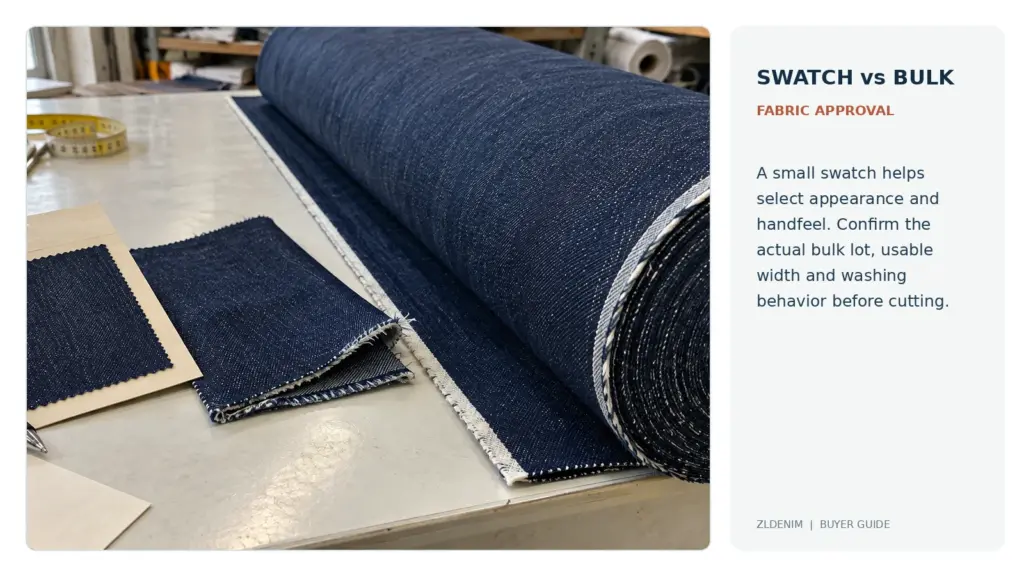
A clothing brand chooses a dark-indigo denim swatch. The color looks right, the fabric feels substantial and the first sample jeans fit well. The buyer approves the sample and places a bulk order.
When the delivery arrives, however, some rolls look a little different. Their handfeel is softer, the color has changed slightly and the usable width is smaller than the cutting factory planned for. The supplier says it is the same style, while the brand says it is not the same as the sample.
Approving a denim swatch and approving a bulk fabric lot are two separate decisions. A swatch is an excellent starting reference, but it cannot represent every roll, lot or production condition. Before confirming a jeans production order, compare the proposed bulk material against the original selection and the garment’s technical requirements.
Here are five practical checks that reduce the risk of a denim swatch vs bulk fabric mismatch.
1. Confirm That Construction Matches the Approved Swatch
A small cutting shows surface appearance and handfeel but may conceal technical differences. Start by identifying exactly what was approved. The buyer and supplier should agree on a style number or specification version rather than relying on a photograph or a verbal description such as “dark-blue stretch denim.”
| Approval Item | What to Confirm |
|---|---|
| Style and specification version | Exact product identity |
| Fiber composition | Cotton, polyester, elastane and other percentages |
| Weight | Finished GSM or oz/yd², with an agreed tolerance |
| Weave and twill direction | Construction that matches the sample |
| Yarn character | Clean, slub, crosshatch, OE or Sirospun |
| Handfeel | Desired body, softness and drape |
| Nominal and usable width | Actual requirements for the cutting marker |
| Finish | Surface and dimensional behavior after finishing |
Two fabrics can have the same weight and fiber content without behaving alike. A 10oz open-end denim may display a grainier face than a 10oz Sirospun construction; the same weight does not make them interchangeable. Keep an identifiable retained sample, with its date, approved style, color and lot reference where available. That physical master becomes useful if there is a disagreement when the bulk delivery arrives.
2. Approve the Actual Dye Lot and Shade
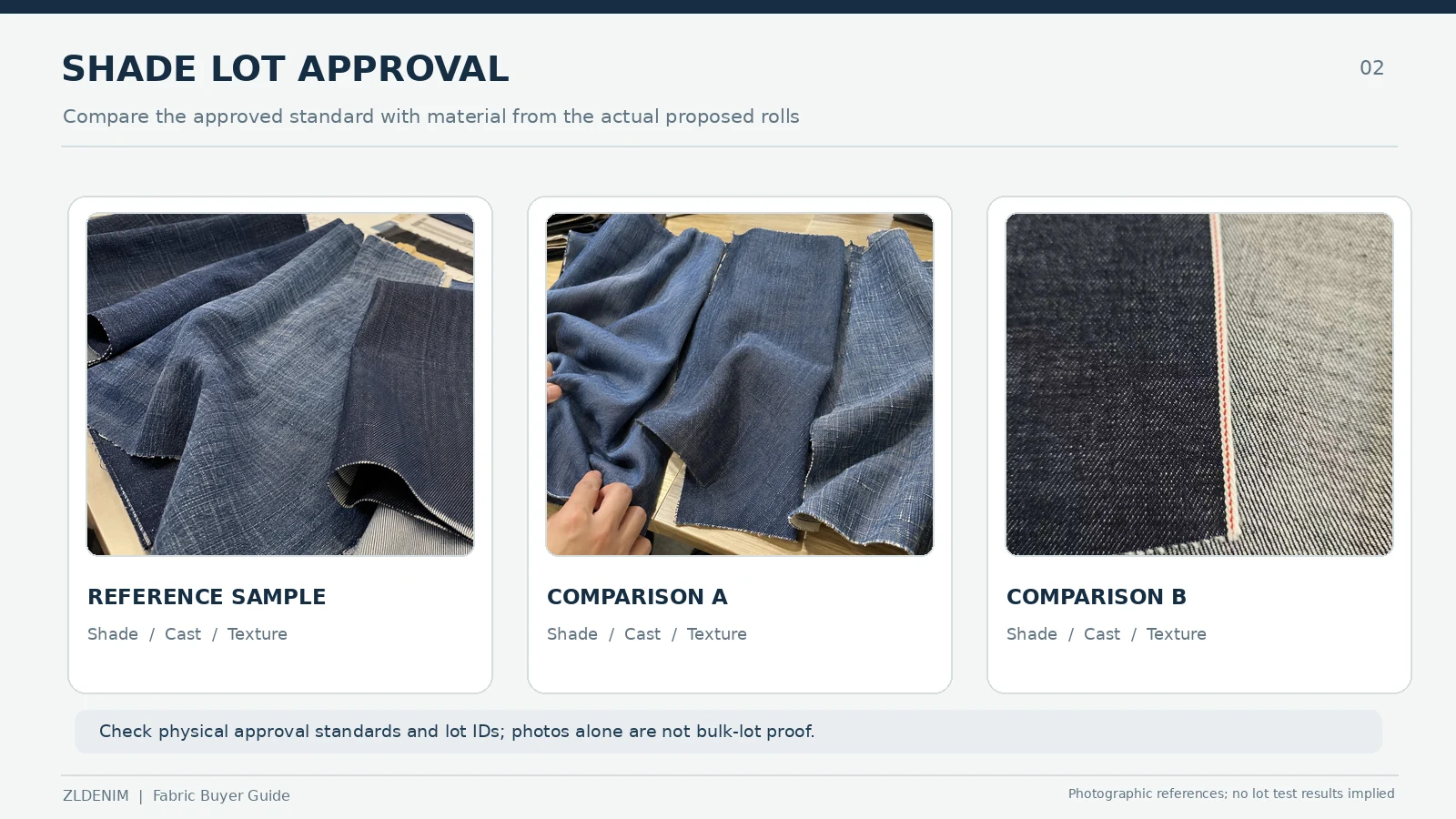
Indigo depth and cast can vary between production lots, between rolls and occasionally across a single roll. A dark-indigo swatch from last month may look close to today’s available stock but respond differently during garment washing.
Before final order approval, ask whether the order will be supplied from one dye lot or assembled from multiple lots. If final color is important, request samples from the actual proposed stock where practical. Compare against the approved master under agreed viewing conditions, not merely through smartphone photographs.
Why Washed Shade Matters
Two unwashed rolls may look similar but fade to visibly different shades after enzyme, stone or bleach treatment. A sewn, labeled shade blanket can be washed with a representative recipe to compare roll-to-roll behavior. That information helps the cutting team decide which rolls belong in compatible shade groups.
Do not assume that identical shade names guarantee identical finished jeans. See our Denim Shade Variation Between Rolls Guide for more about shade-band grouping and preventing mismatched garment panels.
3. Verify Usable Width, Weight and Stretch Behavior
A hand swatch does not show the entire fabric width. Buyers need the usable cutting width, not only the number printed on the roll label. Selvedges, pin marks, curled edges or unacceptable side-to-center shade may reduce the area available for pattern pieces.
Consider a marker that requires 176cm of usable width. A nominal 180cm roll may still be unusable for that marker if its actual cuttable width falls below 176cm. A factory may have to lengthen the cutting marker or isolate the roll, increasing cost. For stretch denim, width measurement should follow the agreed relaxation and spreading conditions.
Ask for finished weight under an identified measurement method. If one party quotes ounces per square yard and the other quotes GSM, confirm that both refer to compatible finishing conditions. Weight is useful for checking construction, but it does not prove how the fabric will drape.
For elastic fabrics, the spandex percentage is not a substitute for measured extension, growth and recovery. A 1.5% spandex label cannot tell a pattern maker exactly how the knees or seat will behave after use. If the finished jean needs reliable shape retention, request the relevant performance information under agreed conditions.
For a cost example, consult our Denim Fabric Width Guide.
4. Test the Fabric With the Intended Garment Wash
A raw or finished swatch may look excellent on the desk but change substantially after garment processing. Enzyme abrasion, bleach, desizing, softening and drying can affect indigo shade, fabric strength, surface texture, handfeel, shrinkage and stretch performance.
A representative wash trial should answer practical development questions. Does the fabric fade to the approved color? Does the surface become too fuzzy or too flat? How much do warp and weft dimensions change? Do seams pucker, twist or show unwanted abrasion? For stretch jeans, does the garment maintain its fit and recovery?
A light rinse cannot reliably predict the result of a heavy vintage wash. Use the intended or appropriately representative process and record the test conditions.
Swatch Card vs Sample Yardage
A small swatch is usually enough for initial color and construction review. It may not be enough to make a full pair of jeans or run a relevant washing trial. When contacting the supplier, specify whether you need a hanger card, one or more full-width panels, garment sample yardage or testing material from a particular lot. Sample availability and any charges or shipping arrangements must be confirmed for the selected style.
5. Lock the Bulk Lot, Roll Details and Approval Record
Once the fabric passes development, the purchasing team still needs a clear delivery specification. This includes the accepted style, shade reference, quantity, pricing unit, width, applicable tolerances, delivery arrangement and any agreed lot restrictions. The production factory should know which rolls are approved for which garment wash or shade group.
| Approval Stage | Evidence | Decision |
|---|---|---|
| Fabric construction | Approved specification and retained swatch | Approve / Hold |
| Color and lot | Actual-lot samples or shade review | Approve / Hold |
| Width and physical properties | Measured or agreed technical record | Approve / Hold |
| Garment wash | Relevant washed sample and dimensional review | Approve / Hold |
| Shipment identity | Lot breakdown, roll references and quantity | Release / Hold |
If the supplier has to change the proposed production lot after approval, review the changes that matter. A new lot may need another shade comparison or a wash trial. The goal is not to demand an impossible promise that every meter will be visually identical; it is to agree on tolerances and prevent an unapproved substitution from reaching production.
What If the Delivered Bulk Does Not Match?
Do not mix suspect rolls into production before identifying the difference. Isolate the affected quantity and compare it with the approved master. Record the roll number, dye lot, precise discrepancy and the amount involved. Review whether the material should be accepted, shade-banded separately, retested, replaced or handled under the agreed commercial terms.
Photographs are helpful for describing a problem but may not be reliable enough for formal color approval. Preserve labeled physical evidence and testing information where appropriate. Early identification can prevent the much greater cost of cutting and sewing incompatible material.
A Better Denim Swatch Approval Email
We approve the submitted denim reference for initial garment development. Before confirming the bulk order, please verify the current production lot, fiber composition, finished weight, usable width and available roll quantity. We would like representative material from the proposed lot for our garment wash and shade review. Please identify any differences from the original approved reference before shipment confirmation.
This separates development approval from bulk-lot release and gives both sides a concrete checklist.
Frequently Asked Questions
Why does bulk denim sometimes differ from the original swatch?
Possible reasons include a different dye lot, yarn variation, finishing conditions, sample age or a sample that did not represent the eventual supply lot.
Is one denim swatch enough to approve a large order?
Usually not for a shade-sensitive or technically demanding program. Confirm actual-lot identity, cuttable width and relevant wash performance before bulk cutting.
Can two fabric lots have the same color name but different shades?
Yes. A commercial shade name is not a numerical tolerance. Keep an approved physical reference and use a defined comparison procedure.
Should buyers request samples from the actual bulk lot?
When final shade or washing behavior is critical, actual-lot samples are valuable whenever available and agreed with the supplier.
How should a buyer request sample yardage?
State the style number, garment type, wash plan and length or number of full-width panels needed. The supplier can then check the current lot and sampling arrangements.
Final Thoughts: Approve the Fabric You Will Receive
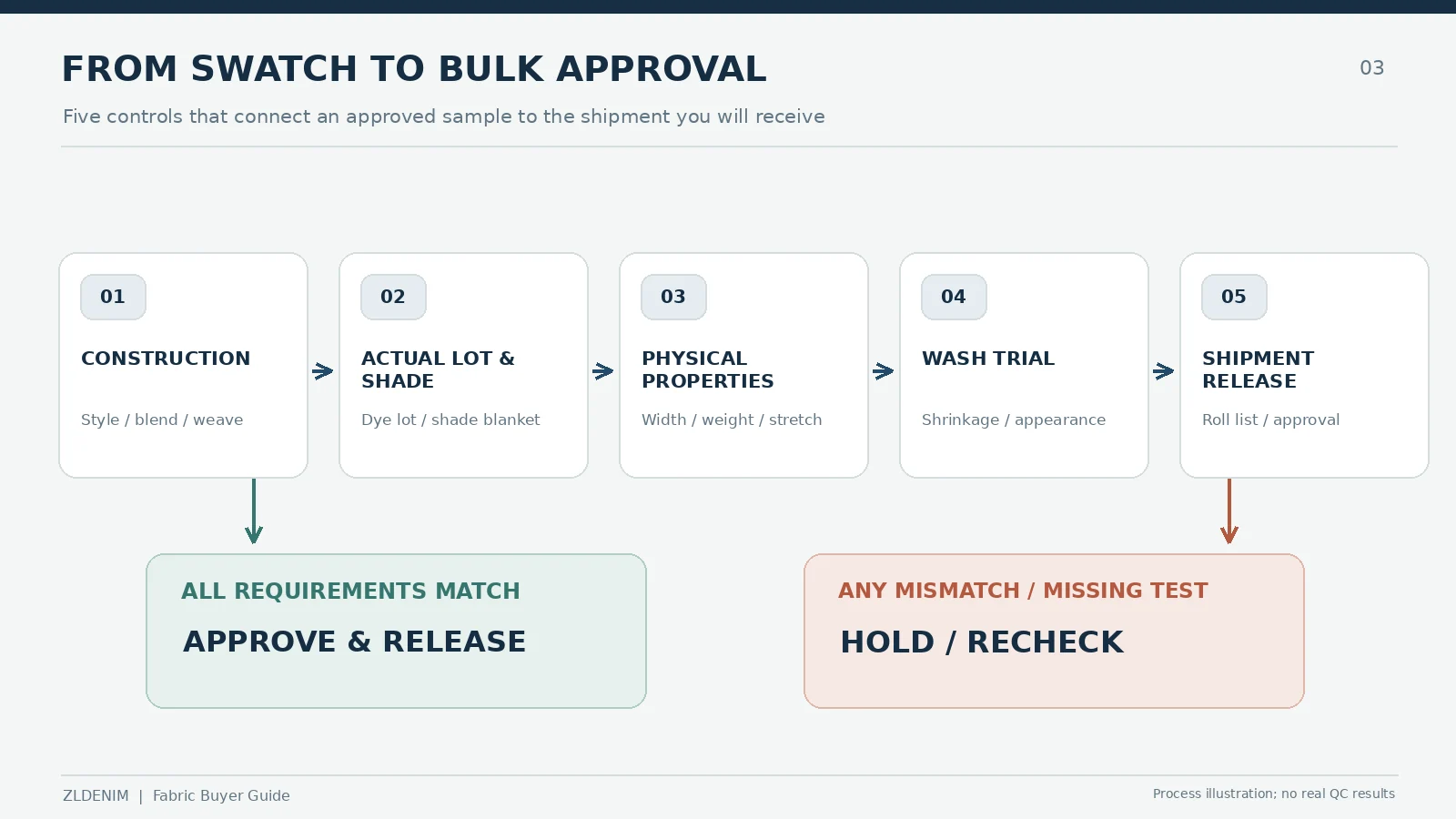
A swatch helps select a style. A bulk approval confirms what the factory will actually cut and wash. Use the sequence approve construction → verify actual lot and shade → check width and physical properties → test the wash → release the documented order.
Explore the ZLDENIM Fabric Catalog or review sampling guidance at ZLDENIM Samples. For a specific specification or current stock-lot inquiry, send the fabric reference, target quantity and garment wash through Denim Sourcing. Availability, samples and additional testing can be discussed for the selected fabric.